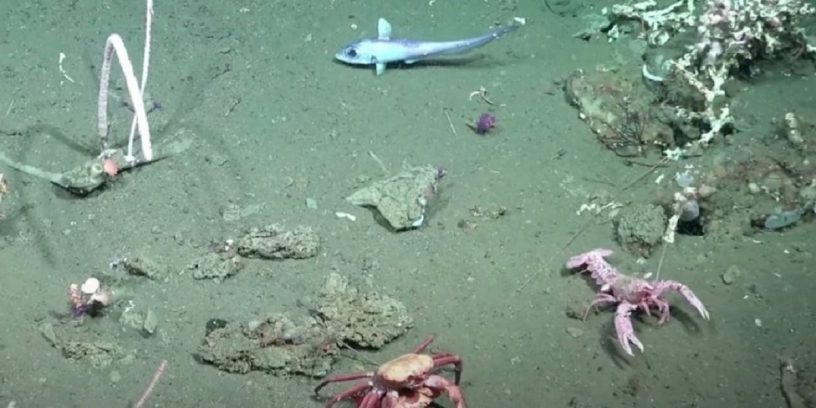



Ma quanto è affollato il canyon di Mar del Plata!
The Mar del Plata submarine canyon is located in the southwestern Atlantic Ocean, off the coast of Argentina, about 400 kilometers south of the capital, Buenos Aires. Its deepest point exceeds 3,500 meters. On August 1, 2025, a live broadcast on YouTube was launched: the video was transmitted from the canyon’s seabed via a remotely controlled underwater robot named “ROV SuBastian,” equipped with high-definition cameras and capable of collecting biological samples with precision. The expedition lasted 21 days and aimed to explore the seabed and directly observe its rich biodiversity, which is, for the most part, yet to be discovered. The expedition discovered over 40 possible new, bizarre, and alien-looking marine species. Sadly, it also revealed traces of human activity, such as debris and plastic, all directly observed for the first time thanks to the live-broadcast images. Marine species were sighted, some already known to science, but others thought to be unknown, including: sea anemones, starfish, snails, “glass” corals, squids, cephalopods, siphonophores, ctenophores, nudibranchs, deep-sea fish, crabs, molluscs, spirographs, jellyfish, coelenterates, echinoderms, lobsters, Patagonian pink lobsters, crinoids, and many other invertebrate organisms. Currently, videos uploaded to various media channels have amassed over a million views, achieving great success and appeal, especially among the Argentine public. They have also become a tool for protest against Argentine President Javier Milei’s cuts to funds allocated for public scientific research. In particular, a starfish has become a viral meme. Given its rounded curves, it has been named “estrella culona” by livestream users and compared to the famous marine character Patrick Star from the animated cartoon show “SpongeBob.” The footage and the robot are owned by the “Schmidt Ocean Institute,” a non-profit foundation that advances innovative oceanographic research through technological innovation, dissemination, and open-source information. Previous expeditions were organized in 2012 and 2013 for seabed exploration, but last August’s expedition had greater relevance and interest from scientists as the canyon’s first high-tech expedition, using more advanced and effective techniques than previous ones. What has opened up is, in fact, a possible glimmer of hope for new research on marine fauna and biodiversity and the protection and conservation of ecosystems, which are dramatically at risk because of climate change.
Il canyon sottomarino di Mar del Plata si trova nell’Oceano Atlantico sud-occidentale, al largo della costa dell’Argentina e circa 400 chilometri a sud della capitale, Buenos Aires; il suo punto più profondo supera i 3.500 metri. Il 1° agosto 2025 è stata avviata una diretta su YouTube: il video in questione è stato trasmesso dai fondali marini del canyon tramite un robot sottomarino controllato da remoto e denominato “ROV SuBastian”, dotato di telecamere ad alta definizione e capace di raccogliere campioni biologici in modo mirato. La spedizione è durata 21 giorni e aveva l’obiettivo di esplorare i fondali marini e osservarne direttamente la ricca biodiversità, per la maggior parte ancora da scoprire. La spedizione ha portato alla luce oltre 40 possibili nuove specie marine dall’aspetto bizzarro e alieno, ma anche, tristemente, tracce di attività umane, come la presenza di detriti e plastiche, il tutto osservato direttamente per la prima volta grazie alle immagini trasmesse. Sono state dunque avvistate specie marine, alcune già note alla scienza, ma altre sconosciute, tra cui anemoni di mare, stelle marine, lumache, coralli, calamari “di vetro”, cefalopodi, sifonofori, ctenofori, nudibranchi, pesci abissali, granchi, spirografi, molluschi, meduse, celenterati, echinodermi, aragoste, astici rosa della Patagonia, crinodi e molti altri organismi. Attualmente, i filmati caricati sui vari canali media hanno accumulato oltre un milione di visualizzazioni, riscuotendo per il loro fascino un grande successo, soprattutto da parte del pubblico argentino, che ne ha fatto anche uno strumento di contestazione nei confronti del presidente Javier Milei per i tagli ai fondi destinati alla ricerca scientifica pubblica. In particolare, è divenuta virale come meme una stella marina che, date le sue curve tondeggianti, è stata denominata dagli utenti delle dirette “estrella culona” ed è stata accostata anche al famoso personaggio marino Patrick Stella del cartone animato “Spongebob”. Le riprese e il robot sono di proprietà dello “Schmidt Ocean Institute”, una fondazione senza scopo di lucro finalizzata alla ricerca oceanografica innovativa attraverso il progresso tecnologico, alla divulgazione e all’ informazione libera. Altre spedizioni erano state organizzate nel 2012 e nel 2013 per l’esplorazione dei fondali, ma quella dello scorso agosto ha avuto maggiore rilevanza e interesse da parte degli scienziati, in quanto prima spedizione high-tech del canyon, con l’utilizzo quindi di tecniche più avanzate ed efficaci rispetto alle precedenti: quello che si è aperto, infatti, è un possibile spiraglio per nuove ricerche sulla fauna e biodiversità marina e per la protezione e conservazione degli ecosistemi, drammaticamente a rischio a causa dei cambiamenti climatici.








Lascia una risposta