

ERASMUS E LE ISTITUZIONI EUROPEE: UN VIAGGIO NELLA POLITICA DI BRUXELLES
Taking part in an Erasmus project means much more than studying or living abroad: it is an experience of personal and cultural growth that allows you to learn new languages, discover new cultures, and ways of living. Thanks to Erasmus, young people have the chance to experience life in another country, face new realities, and develop skills that will be useful in the future. But Erasmus is not only an individual journey: it is also a concrete way to get closer to the idea of a united Europe. Living abroad helps you understand fundamental values such as coexistence, solidarity, and intercultural dialogue, all key pillars of the European Union.
BRUSSELS: THE POLITICAL HEART OF EUROPE
Brussels is known as the political capital of the European Union and is truly the centre of European action! Here you can find the main institutions that make important decisions affecting all of us: from the management of EU funds to environmental rules, education policies, and citizens’ rights. Visiting Brussels means getting in touch with the place where many decisions that impact daily life in the EU are made. The institutions work together, each with a specific role, to ensure democracy, cooperation, and progress across the whole Union.
The main institutions
The European Commission: It is like the “engine” of Europe. It is the EU’s executive body. Its role is to propose new laws and ensure they are correctly applied in all Member States.
The European Parliament: This institution represents EU citizens. It has two main seats: one in Brussels, where decisions are prepared, and one in Strasbourg, where the monthly plenary sessions take place. Here, members, elected by citizens, debate and vote on laws.
The Council of the European Union: It is made up of the ministers from each Member State, who decide together on laws and common policies.
The European Council: It brings together the Heads of State or Government. Unlike the other institutions, it does not pass laws every day; it sets the general priorities and the political direction of the European Union.
MY EXPERIENCE!
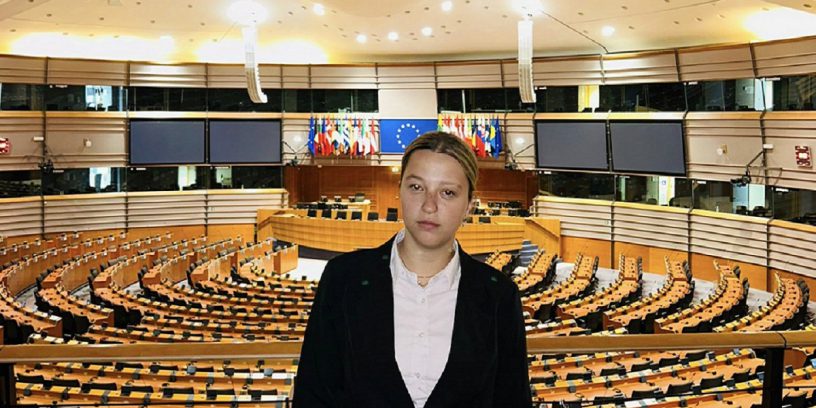
From 23 to 29 November, I had the opportunity to take part in a very special Erasmus project: we went to Brussels to visit the main European institutions. It was a unique experience because it allowed me to see up close how decisions that affect all of us are made. During the week, we visited the Council of the European Union, the European Commission, and the European Parliament. At the Council, I understood better how ministers from different countries work together to make decisions for all Member States. At the Commission, I learned how legislative proposals aredrafted and how many people work every day to make Europe function. At the Parliament, we mainly visited the hemicycle, the symbolic place where thecitizens’ representatives meet and carry out most legislative activities.
This experience really opened my mind. Participating in an Erasmus project like this not only helps you discover different cultures, but also understand how the European Union works. Seeing first-hand where and how decisions are made, and how much work and cooperation they require, helps you realise how important it is to participate and feel part of something bigger. Projects like this really help young people learn more about Europe, become more aware citizens and leave them with unforgettable memories!
Partecipare a un progetto Erasmus significa molto più che studiare o vivere all’estero: è un’esperienza di crescita personale e culturale che permette di conoscere nuove lingue, culture e stili di vivere. Grazie all’Erasmus, i giovani hanno l’opportunità di sperimentare la quotidianità in un altro Paese, confrontarsi con nuove realtà e sviluppare competenze utili per il futuro. Ma l’Erasmus non è solo un percorso individuale: rappresenta anche un modo concreto di avvicinarsi all’idea di Europa unita. Vivere all’estero permette di comprendere valori fondamentali come la convivenza, la solidarietà e il dialogo interculturale, che sono i veri pilastri dell’Unione Europea.
BRUXELLES: IL CUORE POLITICO DELL’EUROPA
Bruxelles è conosciuta come la capitale politica dell’Unione Europea e, a ben vedere, è il vero centro dell’azione europea! Qui hanno sede le principali istituzioni che prendono decisioni cruciali che riguardano tutti noi: dalla gestione dei fondi UE alle norme ambientali, passando per l’istruzione e i diritti dei cittadini. Visitare Bruxelles significa entrare in contatto con il luogo in cui vengono prese molte delle decisioni che impattano sulla vita quotidiana dei cittadini europei. Queste istituzioni lavorano in sinergia, ognuna con un ruolo specifico, per garantire democrazia, cooperazione e progresso.
Le istituzioni principali
La Commissione Europea: spesso definita il “motore” dell’Europa, è l’organo esecutivo dell’UE. Il suo compito principale è proporre nuove leggi, assicurarsi che vengano applicate correttamente in tutti gli Stati membri.
Il Parlamento Europeo: è l’istituzione che rappresenta i cittadini dell’UE attraverso i deputati eletti direttamente da noi. Ha due sedi: una a Bruxelles, dove si svolgono i lavori delle commissioni e le sessioni supplementari, e una a Strasburgo, sede ufficiale delle sedute plenarie mensili, in cui si votano le leggi.
Il Consiglio dell’Unione Europea: è composto dai ministri dei vari Paesi membri, che si riuniscono per discutere, modificare e adottare leggi e coordinare le politiche comuni.
Il Consiglio Europeo: riunisce i capi di Stato e di governo. A differenza degli altri organi, non esercita funzioni legislative quotidiane, ma definisce le priorità generali e gli orientamenti politici dell’Unione.
LA MIA ESPERIENZA!
Dal 23 al 29 novembre ho avuto l’opportunità di partecipare a un Erasmus davvero speciale: un viaggio a Bruxelles per visitare le principali istituzioni europee. È stata un’occasione unica, perché mi ha permesso di vedere da vicino come vengono prese le decisioni che influenzano la vita di tutti noi. Durante la settimana abbiamo visitato il Consiglio dell’Unione Europea, la Commissione Europea e il Parlamento Europeo. Al Consiglio ho compreso meglio come i ministri dei vari Paesi collaborino per raggiungere accordi comuni che riguardano tutti noi. Alla Commissione ho scoperto come nascono le proposte legislative e quante persone lavorino ogni giorno per il funzionamento della macchina europea. Al Parlamento, infine, abbiamo visitato principalmente l’emiciclo, luogo simbolico dove si incontrano i rappresentanti dei cittadini e dove si svolgono le principali attività legislative.
Questa esperienza mi ha davvero aperto la mente. Vivere un’esperienza Erasmus di questo tipo non serve solo a conoscere culture diverse, ma anche comprendere a fondo il funzionamento dell’Unione Europea. Vedere di persona dove e come vengono prese le decisioni, e quanto lavoro e cooperazione richiedano, fa capire quanto sia importante partecipare e sentirsi parte di qualcosa di più grande. Progetti come questo aiutano davvero a conoscere meglio l’Europa, a diventare cittadini più consapevoli e rimangono impresse nel cuore!







Lascia una risposta